
Thailand: Move Forward Vows to Push On
‘Our time will come’: Thai leader prevented from becoming PM hails dawn of a new era
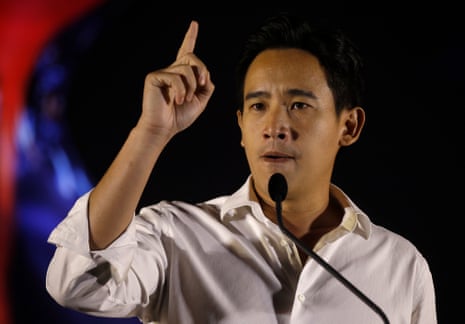
Pita Limjaroenrat is playing the long game. “Our time will come”, he says confidently. Dressed in a crisp striped shirt, the 43-year-old Harvard graduate has a breezy, businesslike manner.
It’s almost five months since his reformist party, Move Forward, defied expectations and came top in Thailand’s elections. It’s been quite the rollercoaster since: legal cases were filed against him and the party, he was blocked from taking office by rivals, and he is now suspended as an MP.
Yet Pita continues to tour the country to keep up the political momentum – going anywhere “except Government House”, where his access has been revoked. He has been met by supporters who feel “anger, frustration, with tears on their cheeks”, he tells the Guardian in a sit-down interview. “They say they are by my side and they can wait for four more years,” he adds, referring to the next election.
Pita says he absolutely wants to run again. He believes he can still become Thailand’s prime minister.
He grew up in a wealthy family that has political links – his uncle Padung Limcharoenrat was an aide of the former prime minister Thaksin Shinawatra. He studied at Bangkok’s Thammasat university, Harvard and the Massachusetts Institute of Technology. He worked in his family’s agriculture business, later becoming the executive director of Grab Thailand, a ride-hailing and delivery app.
Despite his belief that he can become prime minister one day, he is also prepared for worst-case scenarios – including the possibility of the courts banning him from politics, or his party being dissolved. “We are a movement and the party is simply a vehicle,” he says. “We have a succession plan. We will continue this journey regardless of the outcome.”
Pita points out that time is on his party’s side. At 43, he is younger than many of his rivals, including the military generals who dominated Thai politics for the past decade.
‘I see myself as common sense’
Pita doesn’t speak like a typical fiery activist. His sentences are measured, and at times peppered with corporate-speak: he talks of “scenario analysis” when judging the risks to his party, of “sunk costs” when asked if military-appointed senators will relinquish power.
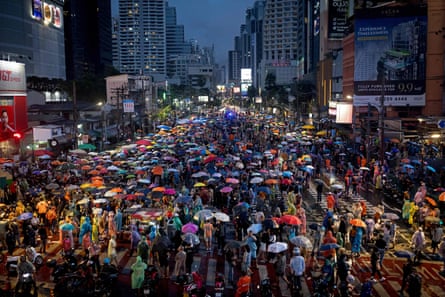
Yet the policies of Move Forward, and its success in attracting voters, have shaken Thai politics. The party has confronted Thailand’s powerful institutions – pledging to reform the military, tackle monopolies and, most sensitive of all, amend the lese-majesty law that forbids criticism of the monarchy, once viewed as untouchable.

 Engage!
Recent Comments